
Content
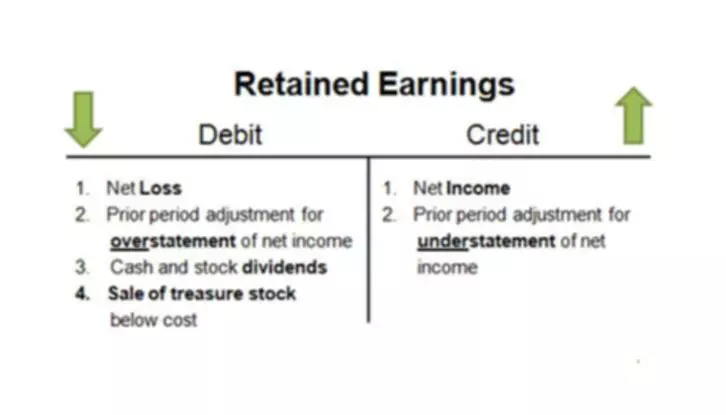
In later years once the company has paid any amount of dividends, the remainder is recorded as an increase in Retained Earnings. This balance is carried from year to year and thus will grow as a company ages. When operating expenses exceed the gross profit of a sale, you can become trapped in a repetitive cycle. While sales may be consistent, they can ultimately provide little growth if they are repeatedly put back into sustaining the company’s office space, equipment, payroll, insurance, etc. Although a company may still be able to demonstrate financial success, its retained earnings may decrease over time if it has too many outstanding debts or dividends. Retained earnings are the money that rolls over into every new accounting period. So the more profitable a company is, the higher its retained earnings will be.
- This bookkeeping concept helps accountants post accurate journal entries.
- A retained earnings total is an important figure for businesses to measure and track, but it has its downsides.
- Companies may choose to use their retained earnings for increasing production capacity, hiring more sales representatives, launching a new product, or share buybacks, among others.
For this reason, high retained earnings are typically a good sign to investors, especially those who didn’t buy in specifically for dividend payments. In simplest terms, retained earnings are a company’s profits minus its previous dividends. The term retained means that funds were not paid to shareholders as dividends instead of being held by the corporation. Retained earnings are what a business earns after it has given shareholders their part of the profits. A company’s retained earnings can show what phase of development the company is in at a given point in time.
How to Improve Retained Earnings
Negative retained earnings indicate that a business took a loss and has less cash available now than it did before. Alternatively, imagine a consultancy that starts the month with $10,000 in retained earnings so far for the year.
- Both revenue and retained earnings are important in evaluating a company’s financial health, but they highlight different aspects of the financial picture.
- On the asset side of a balance sheet, you will find retained earnings.
- Revenue on the income statement is often a focus for many stakeholders, but the impact of a company’s revenues affects the balance sheet.
- Retained earnings make up part of the stockholder’s equity on the balance sheet.
- Net income or net profit which is not expended to shareholders in the form of dividends becomes part of retained earnings.
Since net income is added to retained earnings each period, retained earnings directly affect shareholders’ equity. In turn, this affects metrics such as return on equity , or the amount of profits made per dollar of book value. Once companies are earning a steady profit, it typically behooves them to pay out dividends to their shareholders to keep shareholder equity at a targeted level and ROE high. Revenue provides managers and stakeholders with a metric for evaluating the success of a company in terms of demand for its product. As a result, it is often referred to as the top-line number when describing a company’sfinancial performance.
Where Can Retained Earnings Be Found on a Balance Sheet?
When looking for stocks that pay regular dividends, investors look for companies with lower retained earnings, because those businesses are paying investors a greater share of profits. Having too low of a retained earnings figure can be a bad sign, however, as businesses need to be capable of reinvesting in themselves. You may also distribute retained earnings to owners or https://www.bookstime.com/ shareholders of the company. Companies that pay out retained earnings in the form of dividends may be attractive to investors, but paying dividends can also limit your company’s growth. That’s why many high-growth startups don’t pay dividends—they reinvest them back into growing the business. Retained earnings aren’t the same as cash or your business bank account balance.
Are retained earnings a type of equity?
Retained earnings are a type of equity and are therefore reported in the shareholders’ equity section of the balance sheet. Although retained earnings are not themselves an asset, they can be used to purchase assets such as inventory, equipment, or other investments. Therefore, a company with a large retained earnings balance may be well-positioned to purchase new assets in the future or offer increased dividend payments to its shareholders.
Though gross revenue is helpful in accounting for, it may be misleading as it does not fully encapsulate the activity regarding sale activity. For example, a company may post record-level sales; however, a major recall that resulted in 10% of all sales being returned will have material consequences on net revenue. Though the last option of debt repayment also leads what are retained earnings to the money going out of the business, it still has an impact on the business’s accounts . All of the other options retain the earnings for use within the business, and such investments and funding activities constitute retained earnings. These adjustments could correct errors or rectify incorrect estimates that were used in the preceding accounting period.